Head Start's staff wage rule is being removed: what changes on January 15, 2027
A final rule published November 16, 2026 deletes Head Start's 2024 wage and benefit requirements for staff. What comes out, when, and what stays.
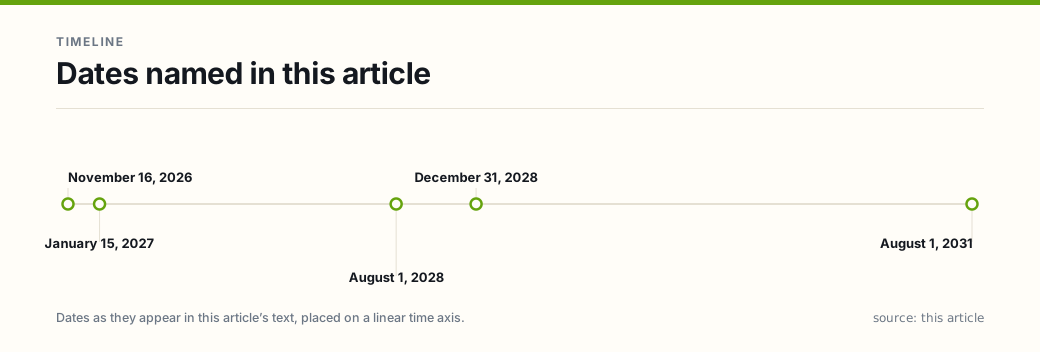
The Department of Health and Human Services has removed the staff wage and benefit requirements from the Head Start Program Performance Standards. The final rule, published November 16, 2026 under the title “Restoring Flexibility To Support Head Start Program Access”, takes effect January 15, 2027 and deletes two paragraphs — 45 CFR 1302.90(e) and (f) — that were added by a 2024 rule and were due to be fully implemented by 2031.
On paper the change is narrow: two paragraphs of one section of a regulation that runs to hundreds of pages. In money it is not: the Administration for Children and Families estimates the rescission yields roughly $2.1 billion a year in future cost savings for programs and preserves about 106,000 funded slots that would otherwise have been cut to pay for higher wages.
What did the 2024 rule require?
The 2024 final rule, “Supporting the Head Start Workforce and Consistent Quality Programming”, was the largest change to Head Start’s workforce rules in years. Its compensation provisions had two deadlines.
By August 1, 2031, programs would have had to:
- adopt a salary scale, wage ladder or similar pay structure covering all staff;
- pay each Head Start teacher a salary comparable to preschool teachers in public school settings in the local district — with an alternative test allowing at least 90 percent of the kindergarten teacher salary;
- ensure every staff member’s wage was generally sufficient to cover basic needs such as food, housing, utilities, medical costs, transportation and taxes;
- keep pay comparable for similar roles regardless of the age of children served, so that Early Head Start staff were not paid less than Head Start Preschool staff for equivalent work.
By August 1, 2028, programs would have had to provide or facilitate health coverage, offer paid leave, offer access to behavioral health services, point staff to child care and to Public Service Loan Forgiveness, and review every five years whether their benefits matched those of local elementary school staff.
Two safety valves sat inside those requirements: agencies with 200 or fewer funded slots were exempt, and between January 1 and December 31, 2028, the Secretary could establish a waiver process for the parity and salary-floor provisions — but only if Head Start appropriations had grown by less than 1.3 percent a year on average over the preceding four fiscal years.
What does the 2026 rule actually remove?
| Provision | Status from January 15, 2027 |
|---|---|
| Pay scale for all staff (due 2031) | Removed |
| Pay parity with public preschool teachers (due 2031) | Removed |
| Salary floor tied to basic cost of living (due 2031) | Removed |
| Pay comparability between Head Start Preschool and Early Head Start (due 2031) | Removed |
| Specified benefits — health coverage, paid leave, behavioral health access, child care referrals, PSLF assistance (due 2028) | Removed |
| Small-agency exemption for 200 or fewer slots | Moot — nothing left to exempt |
| Appropriations-triggered waiver process | Moot |
| Personnel policies, background checks, standards of conduct, dual-language communication (1302.90(a)–(d)) | Unchanged |
| Staff qualification and education requirements | Unchanged |
| Statutory compensation limits in section 653 of the Head Start Act | Unchanged |
| Federal grant rule on reasonable compensation (2 CFR 200.430) | Unchanged |
The amendatory instruction is a single line: amend section 1302.90 by removing paragraph (e) and paragraph (f). Nothing else in Part 1302 is touched, which is why the eligibility rules, the service requirements and the classroom standards in the rest of the part still apply in full.
What does the department say the effect is?
The rule’s regulatory impact analysis puts the savings at about $2.1 billion a year once the requirements would have been fully in force, built from the 2024 rule’s own estimates of $1.2 billion for wages and $877 million for benefits in 2031 dollars. The department describes this not as money returned to the Treasury but as an eventual annual transfer of $2.1 billion — away from staff who would have received higher hourly pay, toward staff who would otherwise have lost hours or jobs.
The slot arithmetic is the argument the rule leans on hardest. Without additional appropriations, ACF estimates about 106,000 funded slots would have had to be eliminated for programs to meet the wage and benefit requirements — roughly 84,000 Head Start Preschool slots and 22,000 Early Head Start slots. For context, the rule notes that Head Start grant recipients receive over $12 billion a year in federal funding.
The 2024 rule itself had estimated that fully implementing the wage requirements could reduce funded enrollment by more than 100,000 slots by 2031, and acknowledged substantial uncertainty in that projection. The present rule cites that estimate as a reason to act.
What does it mean for families?
Nothing in the rule changes who is eligible for Head Start, how a family applies, or which services a program must deliver. The regulations that govern eligibility, selection, ratios, screenings, nutrition and family services are all outside the two paragraphs being deleted.
What could change is capacity and staffing, and there the rule’s own logic cuts both ways. ACF argues that preserving roughly 106,000 slots serves more children than higher wages would have. Commenters who opposed the change — nearly 300 comments arrived, including two multi-signatory letters from members of Congress — argued the savings are not additional money, that programs are unlikely to convert them into new seats, and that low pay will keep driving turnover that undermines quality. The department’s response is that pay decisions now belong to local programs, which can choose to raise wages within their budgets.
Neither side has produced enrollment data from after the change, because the change has not taken effect yet. Programs must set next year’s budgets on their own reading of it.
What does it mean if you work at a Head Start program?
Three practical points, in order of how often they come up.
No one is required to cut your pay. The rule states that nothing in it requires changes to current employee wages or benefits, and that a program that has already raised salaries is not required to reduce them. Compensation is now a local decision.
The benefit deadlines are gone. The August 1, 2028 requirements — facilitating health coverage, paid leave, behavioral health access, child care referrals and PSLF certification — are removed rather than postponed. The Public Service Loan Forgiveness program itself is unaffected; what disappears is a regulatory duty on your employer to help you use it.
Your qualifications are unaffected. ACF states in the rule that it does not modify the education or qualification requirements applicable to Head Start staff, and that the change does not affect federal student aid or the eligibility of colleges to participate in it. If you are working toward a credential because a job posting required it, that requirement did not come from these two paragraphs.
What happens next?
The rule takes effect January 15, 2027, in the middle of the program year for most grantees. Between now and then, programs that had begun restructuring pay — the rule acknowledges that some had already taken steps to comply, including by requesting reductions in their funded slots — have to decide whether to continue, pause or reverse course.
Two things are worth watching. The rule includes a severability clause: HHS states that removing paragraph (e) and removing paragraph (f) are intended to stand or fall independently if a court invalidates one of them. That is standard drafting, but it is drafting written by an agency that expects the rescission to be litigated; whether a challenge is filed is unknown. Separately, some states impose their own pay-parity or credentialing rules on early-childhood programs that take state money, and those rules are not affected by a federal rescission. A program’s obligations can therefore vary by state even where the federal text is now silent — worth asking about if you are negotiating pay.
What is the bottom line?
From January 15, 2027, Head Start programs are no longer required by federal regulation to adopt a pay scale, match public preschool salaries, meet a cost-of-living salary floor, or provide specified staff benefits. The 2024 rule’s 2031 and 2028 deadlines disappear with the paragraphs that created them. Eligibility, services and staffing qualifications are unchanged, and the statutory limits on pay in section 653 of the Head Start Act still apply.
For families, the useful next step is to ask the program you are applying to whether its staffing has changed and whether it expects to hold its slot count; for staff, it is to ask your employer, in writing, what it intends to do about the pay scale it may already have started building.
Frequently asked questions
- Does the 2026 rule change who can enroll in Head Start?
- No. The rule removes two paragraphs of 45 CFR 1302.90, which govern staff wages and staff benefits. It does not touch the eligibility rules in 45 CFR 1302.12, the age limits, the selection criteria, or the list of services a program must provide. Families apply and qualify the same way they did before.
- When does the change take effect?
- January 15, 2027. Until then the wage and benefit requirements remain in the Code of Federal Regulations as written, including the compliance dates of August 1, 2031 for wages and August 1, 2028 for benefits.
- Will Head Start teachers and aides lose pay?
- Nothing in the rule requires a pay cut, and the Department of Health and Human Services says so explicitly: compensation decisions remain with each grant recipient, and nothing in the rule requires changes to current wages or benefits. A program that has already raised pay may keep it. Whether it does is a local budget decision, not a federal rule.
- Do Head Start staff still have to be paid minimum wage?
- Yes. Removing the performance standards does not touch the statute: section 653 of the Head Start Act requires that staff not be paid below the federal minimum wage under the Fair Labor Standards Act, and not above the average rate of compensation in the same area for comparable work. Federal grant rules on the reasonableness of salaries also still apply.
- Why did the department rescind the requirements?
- The stated reasons are local flexibility and access. The Administration for Children and Families argues the 2024 requirements exceeded what the Head Start Act requires, and that meeting them without more money would have forced programs to cut funded slots — the department estimates about 106,000. Commenters, including two multi-signatory letters from members of Congress, disputed that tradeoff and warned about workforce instability.
Sources
Each source is a primary or official reference, checked before publication. Links open the original.
- U.S. Department of Health and Human Services, Administration for Children and Families — final rule 'Restoring Flexibility To Support Head Start Program Access', Doc. No. 2026-23279, published November 16, 2026, effective January 15, 2027 (removal of 45 CFR 1302.90(e) and (f); estimate of over $2 billion in future cost savings; 106,000 funded slots; response to comments; severability) — https://www.federalregister.gov/d/2026-23279
- U.S. Department of Health and Human Services — final rule 'Supporting the Head Start Workforce and Consistent Quality Programming', Doc. No. 2024-18279, published August 21, 2024 (the requirements this rule removes) — https://www.federalregister.gov/d/2024-18279
- U.S. Department of Health and Human Services — proposed rule 'Restoring Flexibility To Support Head Start Program Access', Doc. No. 2026-09383, published May 12, 2026 (the proposal, which drew nearly 300 comments) — https://www.federalregister.gov/d/2026-09383
- 45 CFR 1302.90, Personnel policies (current text of paragraphs (e) wages and (f) staff benefits, with compliance dates of August 1, 2031 and August 1, 2028, the small-agency exemption for agencies with 200 or fewer funded slots, and the appropriations-triggered waiver; paragraphs (a) through (d) remain in force) — https://www.ecfr.gov/current/title-45/section-1302.90
- 42 U.S.C. 9848, section 653 of the Head Start Act (compensation limits: not in excess of the average rate of compensation in the same area for comparable services, and not less than the minimum wage under section 6(a)(1) of the Fair Labor Standards Act; the Level II Executive Schedule ceiling) — https://www.law.cornell.edu/uscode/text/42/9848
- 2 CFR 200.430, Compensation — personal services (federal grant rule that salaries charged to an award be reasonable for the work performed, including comparability with the local labor market) — https://www.ecfr.gov/current/title-2/section-200.430